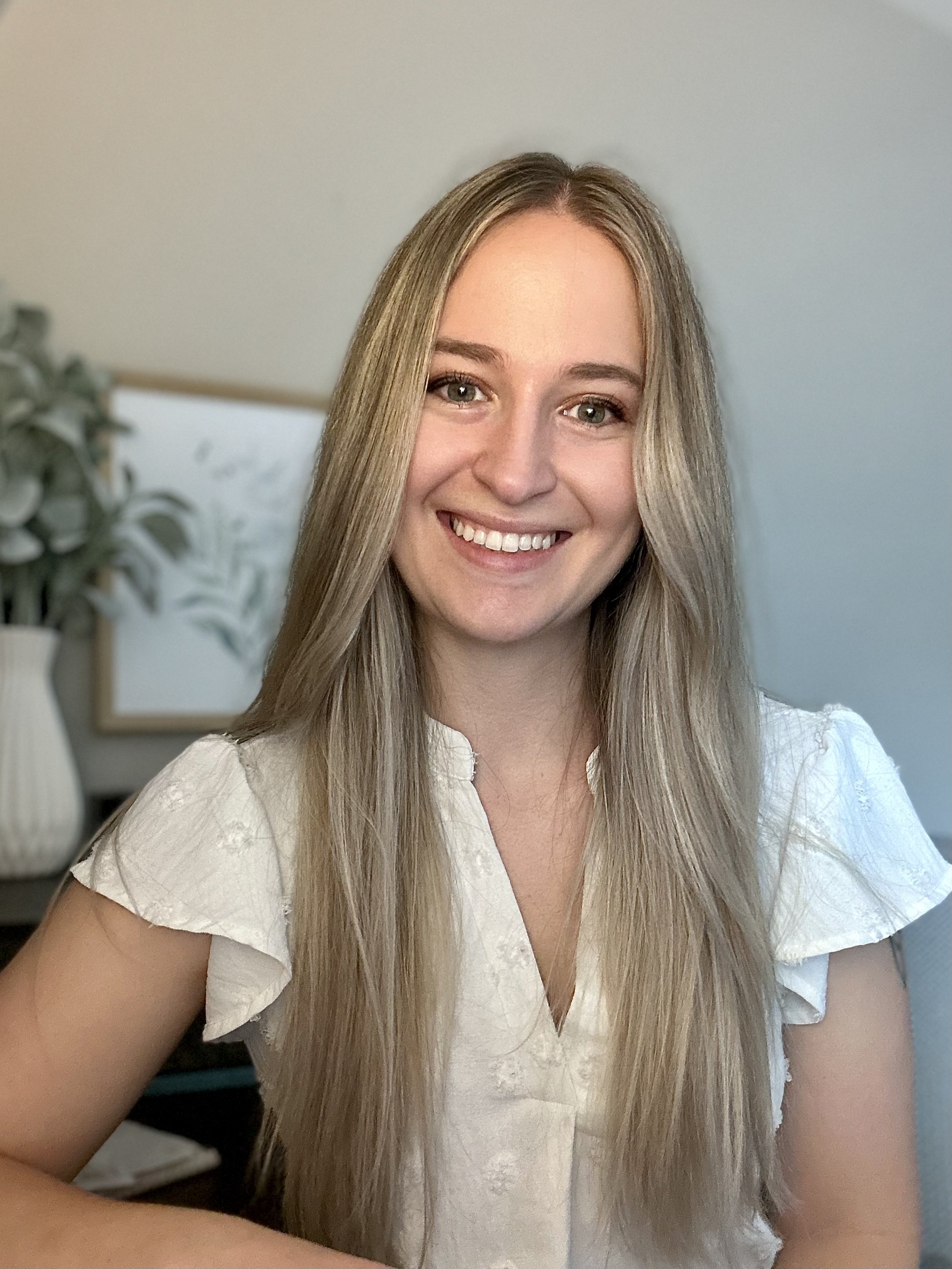
Hi! I’m Heidi
Why do you work with couples?
What sets me apart is that I don't just understand relationship struggles from a clinical perspective—I understand them as a human being. My own experiences with relational trauma have given me a deep appreciation for how difficult it can be to stay connected when hurt, fear, and old wounds are driving the relationship. Because of that, I bring both professional expertise and genuine empathy into the therapy room.
Clients often tell me they feel seen, understood, and challenged in a way that helps them grow. I strive to create a space where both partners feel heard, while also helping them take accountability, build new skills, and move toward the relationship they want. I am deeply invested in my clients' success and believe that meaningful change happens when people feel safe enough to be honest and supported enough to do the hard work of healing.
Is Heidi the right fit for us? That's a fair question — and I want to answer it honestly.
I believe the best couples therapy is a balance of honest conversations and practical tools. In our sessions, I'll work hard to create a space where both of you feel safe enough to say the hard things, even when they're uncomfortable. At the same time, you'll leave with skills and strategies to practice between sessions.
The truth is, most of the work happens outside of therapy. One hour a week isn't enough to change a relationship on its own. Real progress comes from taking what we discuss in session and putting it into practice in your everyday life.
One thing I want every couple to know: I don't take sides. My job isn't to decide who's right or wrong—it's to help you understand each other better and improve the way you relate to one another. That said, I also won't ignore behaviors that are hurting the relationship. If something one partner is doing is causing pain, creating distance, or keeping the two of you stuck, I'll address it with honesty and compassion.
My goal is for both of you to feel heard, challenged, and supported. Together, we'll uncover what's getting in the way of the relationship you want and build the skills to create one that feels safer, stronger, and more connected.
How I Work — And Why It Matters for You
I don't use a one-size-fits-all approach. Every couple brings a different history, different wounds, and different strengths. I draw from several evidence-based frameworks depending on what you need — and I want you to understand what those actually mean for your relationship.
Internal Family Systems (IFS)
Have you ever felt like part of you wants to reconnect with your partner, but another part keeps shutting down or lashing out? That's not a character flaw — that's your internal system trying to protect you.
IFS is a therapy model that helps you understand the different "parts" of yourself — the part that gets defensive, the part that shuts down, the part that desperately wants to be loved. When you understand what those parts are protecting you from, you stop reacting from them automatically. You get to choose how you show up.
For couples, this means:
Understanding why you react the way you do — especially under stress or conflict.
Recognizing that your partner's difficult behaviors often come from their own protective parts, not from a desire to hurt you.
Learning to approach each other — and yourselves — with curiosity instead of blame.
Gottman Method Couples Therapy
The Gottman Method is one of the most researched approaches to couples therapy in the world, developed by Drs. John and Julie Gottman after decades of studying what makes relationships succeed or fail.
It's practical, structured, and built on real data — not just theory. I use it to help couples identify the specific patterns that are eroding their connection and replace them with habits that actually build trust, intimacy, and friendship.
For couples, this means:
Learning to recognize the "Four Horsemen" — criticism, contempt, defensiveness, and stonewalling — and how to interrupt them.
Building a deeper friendship and emotional connection, not just managing conflict.
Developing shared meaning and a vision for your relationship's future.
Getting concrete tools you can use at home — not just insights that stay in the therapy room.
Imago Relationship Therapy
Imago therapy is built on a powerful idea: we are unconsciously drawn to partners who mirror our earliest wounds — and that's not a mistake. It's an opportunity.
The frustrations you feel most intensely in your relationship are often pointing directly to the places where you most need to grow and heal. Imago helps couples turn conflict into connection by teaching a structured way of communicating that creates real safety and understanding.
For couples, this means:
Understanding the deeper "why" behind your recurring conflicts — often rooted in childhood experiences neither of you chose.
Learning the Imago Dialogue — a structured conversation process that helps you truly hear each other, often for the first time.
Shifting from a cycle of reactivity and hurt to one of empathy and healing.
Certified Trauma Treatment Professional
Trauma doesn't always look like a single dramatic event. For many couples, it shows up as hypervigilance, emotional shutdown, difficulty trusting, or an inability to feel safe — even with someone they love.
As a Certified Trauma Treatment Professional, I understand how trauma lives in the body and the nervous system — and how it shows up in relationships. I work with couples where one or both partners carry trauma, helping them create safety, rebuild trust, and move toward healing without retraumatizing either person in the process.
For couples, this means:
A therapist who understands that your reactions aren't "crazy" — they're your nervous system doing its job.
A pace that respects both partners' capacity to process difficult material.
Tools to help you feel safer with each other, even when old wounds get activated.
What This Means for Your Relationship
Most couples come to me with one or more of these experiences:
Stuck in the same argument with no resolution in sight.
Feeling emotionally or physically disconnected.
Trying to recover from betrayal or broken trust.
One or both partners carrying unresolved trauma that's affecting the relationship.
Feeling like they're speaking different languages — and no one is being heard.
My training across IFS, Gottman, Imago, and trauma treatment means I can meet you where you are — whether that's in crisis, in a slow drift, or simply wanting more from your relationship than you currently have.
I don't take sides. I don't decide who's right. I help you both feel understood — and I help you build something better together.
FAQ’s
Do you work with all couples?
I work with couples at every stage — dating, engaged, married, or long-term partners. I welcome all gender identities and sexual orientations. My practice is an affirming, judgment-free space.
What if only one of us has trauma?
That's very common. Trauma in one partner affects both partners. I'm trained to work with couples where one or both people carry trauma, and I'll make sure the pace and approach feel safe for everyone in the room.
Do you use just one approach, or a mix?
A mix — always. I draw from IFS, Gottman, Imago, and trauma-informed practice based on what your relationship needs. No single model fits every couple, and I won't force yours into a box.
What's your style like as a therapist?
Warm, direct, real, with a dash of humor. I'll challenge you when it's useful and support you when you need it. I'm not a blank wall — I'm an active participant in your process. Couples often tell me they appreciate that I'm real with them.
How do I get started?
Reach out for a free 15–20 minute consultation. We'll talk about what's going on, you can ask me anything, and we'll figure out together whether working with me makes sense.
When Couples Therapy Is Not the Right Fit
Couples therapy works best when both partners are safe, willing, and able to engage honestly in the process. There are situations where traditional couples therapy is not appropriate — and where referring out is the most ethical and caring thing I can do.
Couples therapy with me is not a good fit when:
There is active domestic violence or physical abuse. Couples therapy is contraindicated when there is any pattern of physical violence or intimidation. Safety comes first. If this is your situation, please reach out to the National Domestic Violence Hotline at 1-800-799-7233 or text START to 88788.
One partner has significant narcissistic or controlling tendencies. Couples therapy can inadvertently be used as a tool for manipulation when one partner is not genuinely invested in mutual growth. In these cases, individual therapy is often a more appropriate starting point.
There is ongoing emotional or psychological abuse. Patterns of coercive control, gaslighting, or chronic demeaning behavior require individual support before couples work can be safe or effective.
One partner is actively unwilling to participate. Couples therapy requires both people to show up with some degree of openness. If one partner is attending only to appease the other, the process is unlikely to be productive — and may cause more harm.
There is an active, untreated substance use disorder. Addiction significantly impacts the ability to engage in the relational work couples therapy requires. Individual treatment for the substance use is typically the necessary first step.
If any of these apply to your situation, that doesn't mean help isn't available — it means a different kind of help is needed. I'm happy to talk through your situation during a consultation and point you toward the right resources.